

By Winifred August 12, 2026
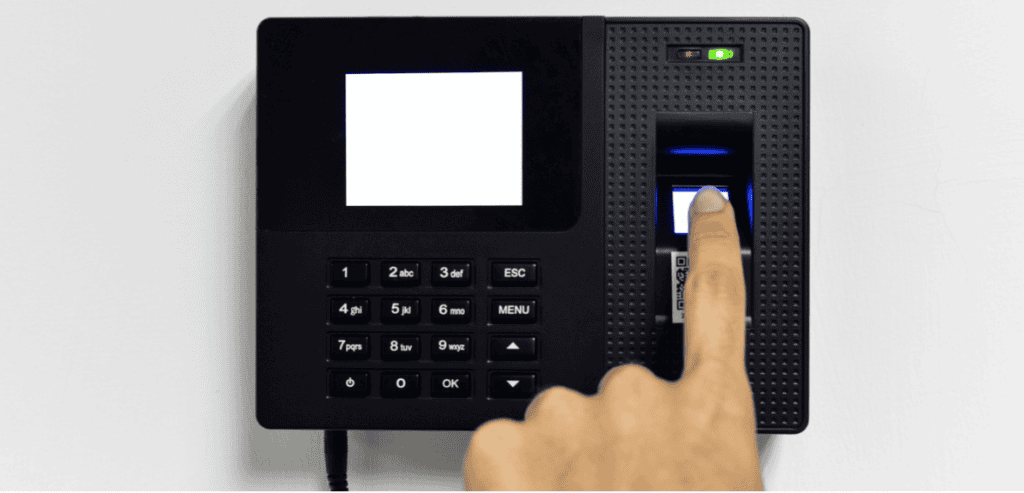
Fingerprint time clocks can make employee attendance tracking faster and more convenient. Instead of carrying badges, remembering PINs, or manually entering hours, employees can clock in or out using a fingerprint or another biometric characteristic. For employers, this can reduce practices such as employees clocking in for one another and can create a more consistent record of working time. The technology may look simple from the outside, but collecting biometric information can create legal and privacy responsibilities that do not exist with an ordinary password or swipe card.
The challenge is that biometric time clock laws are not uniform throughout the United States. States can impose different rules concerning notice, consent, retention, security, disclosure, and destruction of biometric information. Illinois, for example, has detailed requirements under its Biometric Information Privacy Act, while Texas and Washington regulate biometric identifiers through their own statutory frameworks. Employers should therefore understand the law that applies to their workforce before activating fingerprint collection rather than assuming that purchasing compliant hardware automatically makes its use lawful.
Understand What Biometric Information Actually Is
Biometrics are physical or behavioural characteristics that can be used to recognise or verify an individual’s identity. Fingerprints, iris scans, facial characteristics, and certain voice characteristics are common examples, although the exact legal definition varies by jurisdiction. A time clock may not necessarily store a photograph of an employee’s actual fingerprint. Many systems instead create a mathematical template derived from the fingerprint and use that information to recognise the employee during future clock-ins.
Employers should not assume that converting a fingerprint into a template removes biometric privacy concerns. Some laws define biometric information broadly enough to cover information derived from a biometric identifier when it is used to identify a person. Illinois law, for example, defines a fingerprint as a biometric identifier and separately addresses biometric information based on such identifiers. Before deploying a system, employers should understand exactly what the device captures, what the software creates from it, and how applicable law classifies that information.
Do Not Install the Device Before Reviewing the Law
A common operational approach is to buy a time clock, install the software, enrol employees, and deal with paperwork afterward. With biometric systems, that order can create unnecessary legal risk. Some laws impose obligations before biometric information is collected or enrolled, which means an employer may already have a compliance problem by the time it starts thinking about consent forms.
Employers should review applicable federal, state, and local rules before beginning employee enrolment. This is particularly important for organisations operating in multiple states because a process that may be acceptable in one location may require additional steps elsewhere. The legal review should occur while the system is still being selected so the employer can evaluate whether the product provides the controls needed for notice, consent, deletion, security, and record management.
Start by Mapping Where Employees Work
The first practical compliance question is not what model of fingerprint scanner to purchase. It is where the employees who will use the scanner are located. A company with locations in several states may need different enrolment procedures, privacy documentation, or retention processes for different parts of its workforce.
Employers should map each location where biometric attendance technology will be used and identify the laws that may apply. Remote workers, travelling employees, temporary locations, and employees who move between facilities can make this analysis more complicated. Businesses should also monitor changes in state law because biometric privacy regulation continues to develop. Legal counsel familiar with employment and privacy law can be useful when the company operates across several jurisdictions or is uncertain about which rules apply.
Illinois Requires Particular Attention
Illinois is especially important when discussing workplace biometrics because its Biometric Information Privacy Act, commonly called BIPA, establishes detailed obligations for private entities that collect or obtain biometric identifiers or biometric information. Before collecting this information, a covered private entity generally must inform the individual in writing that biometric information is being collected or stored, explain the specific purpose and length of time for which it is being collected, stored, and used, and receive a written release.
These requirements make it particularly important for Illinois employers to complete the documentation process before employees begin using a fingerprint clock. A generic employee handbook statement saying that the company uses electronic timekeeping may not address all of the statutory requirements. Employers should ensure that their biometric notice and release accurately describe the system and its purpose rather than relying on vague language copied from an unrelated policy.
Create a Clear Written Biometric Policy
A biometric policy should explain how the organisation manages biometric information throughout its lifecycle. The policy can describe why the technology is being used, what type of biometric information is collected, how it is protected, who may have access, how long it is retained, and how it will be destroyed when it is no longer needed.
Illinois BIPA specifically requires a private entity in possession of biometric identifiers or biometric information to develop a publicly available written policy establishing a retention schedule and guidelines for permanent destruction. The statute ties destruction to satisfaction of the initial purpose for collecting the data or three years after the individual’s last interaction with the private entity, whichever occurs first, absent a valid warrant or subpoena. A written policy should therefore reflect an actual operational process rather than existing only as a document that nobody follows.
Explain Why the Fingerprint Is Being Collected
Employees should understand the specific reason biometric information is being requested. For a time clock, the purpose might be employee identification when recording clock-in and clock-out events. Employers should avoid unnecessarily broad statements that claim the information may be used for any future business purpose.
Purpose matters because retention and use can be tied to why the information was collected in the first place. If a company collects a fingerprint template for attendance tracking, using the same information later for unrelated monitoring or identification purposes could create additional privacy concerns. A narrowly defined purpose also helps employers decide when the biometric information is no longer required and should be deleted.
Explain How Long the Data Will Be Used
Employees should not have to guess whether their biometric information will remain in a database for a month, several years, or permanently. Where applicable law requires disclosure of the period of collection, storage, or use, the notice should clearly explain the relevant timeframe or retention rule.
Employers should connect the stated period with their actual employment and payroll processes. For example, a business may need the biometric template while an employee actively uses the timekeeping system but no longer need it after employment ends or the organisation switches to another authentication method. Any retention schedule should also account for specific statutory rules. The key is to avoid indefinite storage simply because deleting old information requires additional administrative work.
Obtain Required Consent Before Enrolment
Where consent or a written release is required, employers should obtain it before scanning the employee’s fingerprint. This sequencing is important. Asking someone to sign a form after their fingerprint template has already been created does not change the fact that the collection occurred earlier.
Illinois requires a written release as part of its pre-collection framework for covered private entities. Texas law also regulates the capture of biometric identifiers for a commercial purpose and requires notice and consent before capture under its statute. Washington uses a different framework concerning enrolment of biometric identifiers for a commercial purpose, illustrating why employers cannot rely on one national consent process without checking the laws that actually apply.
Make Consent Meaningful Rather Than Hidden
If a consent form is required, it should be understandable. Hiding biometric language inside a lengthy collection of unrelated employment paperwork may make it difficult for employees to understand what information is being requested and why.
A useful notice should identify the biometric technology, explain its intended purpose, describe the relevant retention period or policy, and provide the information required by applicable law. Employers should also be careful not to make claims about the technology that they have not verified. For example, saying that a vendor “never stores any biometric information” could be inaccurate if the system actually stores biometric templates. The employer should first understand the technical architecture and then describe it accurately.
Understand Whether the System Stores an Image or a Template
Employers frequently hear vendors say that their system does not store fingerprints. What the vendor may mean is that the system does not retain a conventional fingerprint image but instead converts the scan into a biometric template. That distinction can be technologically important, but it does not necessarily eliminate legal obligations.
Ask the vendor what information is produced when an employee enrols, whether an image exists even temporarily, where the template is stored, whether it can be used outside the particular system, and whether the vendor or employer controls the database. Employers should obtain these explanations in writing when possible. Understanding the technical design makes it much easier to prepare accurate employee notices, security procedures, and data-retention policies.
Know Where the Biometric Data Is Stored
A fingerprint time clock may appear to be a simple device hanging near the employee entrance, while the actual biometric data may be processed or stored somewhere entirely different. Information might remain on the device, move to a local server, or be transmitted to a cloud platform operated by the timekeeping provider.
Employers should map the complete data flow before implementation. They should know what information leaves the clock, what travels across the network, where it is stored, and which organisations can access it. This is particularly important when third-party providers participate in enrolment, payroll integration, technical support, or cloud hosting. The employer’s privacy obligations do not disappear simply because another company supplies the software.
Review Vendor Contracts Before Sharing Employee Biometrics
A vendor agreement should receive more scrutiny when the service provider will handle biometric information. Employers should understand what the vendor is permitted to do with the data, what security protections it maintains, whether subcontractors are involved, how data is returned or destroyed, and what happens when the contract ends.
Illinois BIPA places restrictions on disclosure and dissemination of biometric identifiers and biometric information and requires covered private entities to protect biometric data using the reasonable standard of care within their industry and in a manner at least as protective as the way they protect other confidential and sensitive information. Employers should therefore examine the vendor relationship as part of compliance rather than viewing vendor security as entirely outside their responsibility.
Limit Access to Biometric Information
Not everyone who can access payroll or employee records needs access to biometric information. Employers should apply the principle of least privilege, giving access only to individuals whose responsibilities genuinely require it.
System administrators may need technical access, while HR or payroll employees may need limited administrative capabilities. Managers who simply approve timesheets generally do not need the ability to download or manage biometric templates. Access permissions should be reviewed periodically and removed promptly when someone’s job changes or employment ends. The organisation should also use individual administrative accounts rather than shared credentials so activity can be traced where the system supports it.
Protect Biometric Data Like Sensitive Information
Biometric information deserves strong protection because, unlike a password, a physical characteristic cannot simply be replaced when compromised. Illinois lawmakers specifically noted this concern when adopting BIPA, observing that biometrics differ from other unique identifiers because a person cannot simply obtain a new fingerprint or retinal scan if biometric data is compromised.
Employers should ask vendors about encryption, authentication, administrative access, logging, network security, backups, and incident response. Devices should receive supported software and firmware updates, while administrative accounts should use strong authentication. Sensitive information should not be exported casually to spreadsheets, emailed between staff members, or copied to unsecured storage simply because the timekeeping system makes an export function available.
Create a Clear Retention Schedule
Collecting biometric information is only the beginning of the responsibility. Employers need a procedure for deciding when that information should be deleted. Keeping every former employee’s biometric template forever because storage is inexpensive creates unnecessary exposure and can conflict with statutory requirements.
Under Illinois BIPA, the written retention policy must provide for permanent destruction when the initial purpose has been satisfied or within three years of the person’s last interaction with the private entity, whichever occurs first, subject to the statute’s stated exception. Texas also contains destruction requirements for biometric identifiers covered by its statute. Employers should establish deletion procedures based on the specific laws governing their locations rather than creating one arbitrary retention period.
Connect Biometric Deletion to Employee Offboarding
One of the easiest ways to make retention rules operational is to connect biometric records with the company’s employee departure process. When HR marks an employee as separated, the system can trigger a review of whether biometric information must now be deleted and on what schedule.
This procedure should also apply when an employee no longer uses the biometric system even though they remain employed. For example, a person may transfer to a location that uses badge-based timekeeping instead. If the original purpose for retaining the biometric information has ended, the organisation should determine whether continued retention is appropriate under its policy and applicable law. Automating this review where possible can reduce the chance that old templates remain in forgotten databases.
Confirm That Vendors Delete Data Too
Deleting an employee’s profile from an HR dashboard does not necessarily mean every copy of the biometric information has disappeared. The provider may have information in production systems, backups, disaster recovery environments, or another part of its infrastructure.
Employers should understand what the vendor’s deletion function actually does and how long removal takes. Contracts can specify responsibilities when an employee leaves or the customer terminates the service. Businesses should also ask what happens to biometric records if the time clock vendor is replaced. A good migration plan includes deletion from the old platform, not just installation of the new one.
Think Carefully Before Sharing Biometric Information
Biometric information should not become ordinary business data that is freely passed between vendors, affiliates, or other third parties. Applicable statutes can restrict when biometric identifiers or information may be disclosed.
Illinois BIPA generally prohibits disclosure, redisclosure, or dissemination unless one of the statute’s specified conditions applies, including certain forms of consent or circumstances connected with completing a financial transaction, legal requirements, or warrants. Employers should therefore know whether their timekeeping provider sends biometric information to subcontractors or other entities and whether the arrangement is consistent with applicable requirements.
Train HR and Payroll Teams Before Launch
Even a carefully designed policy can fail if the employees administering the system do not understand it. HR, payroll, IT, and managers should know what the biometric clock collects and which procedures apply when enrolling or removing employees.
Training should cover when notices must be provided, when consent must be obtained, who can enrol an employee, what to do if someone has difficulty scanning, and how departing employees are handled. Staff should also know not to improvise biometric collection outside the established process. For example, a manager should not enrol a new employee immediately simply because they forgot to complete the required documentation during onboarding.
Decide What Happens When an Employee Cannot Use the Scanner
Fingerprint systems do not work equally well for every employee. Injuries, worn fingerprints, disabilities, certain occupations, device limitations, or other circumstances may make biometric scanning difficult or inappropriate. Employers should decide in advance what alternative method will be available.
A backup could involve a badge, PIN, supervisor verification, or another approved timekeeping process. Employers should also consider employment and disability laws when determining how alternatives are provided. A biometric system should not create a situation where an employee cannot properly record working time because the scanner repeatedly fails to recognise them.
Keep Wage and Hour Compliance Separate
A biometric clock can improve the mechanics of recording attendance, but it does not replace the employer’s wage and hour responsibilities. Employers still need systems that accurately record compensable working time and correctly apply their policies and applicable law.
Managers should not assume that the biometric timestamp tells the complete story of an employee’s workday. Situations involving missed punches, work performed away from the clock, meal periods, remote work, or corrections may still require attention. The biometric feature primarily verifies who is interacting with the time clock. It does not automatically determine whether every minute of compensable work has been captured correctly.
Establish a Process for Missed or Failed Punches
Technology occasionally fails. An employee may forget to clock in, the network may go down, the fingerprint reader may not recognise a scan, or the device may temporarily be unavailable. Employers need a clear correction procedure.
Employees should know how to report a missing punch and should not be encouraged to ask another employee to use the biometric device on their behalf. Managers should have a documented way to correct records while preserving an audit trail where possible. A reliable correction process helps the business maintain accurate time records while avoiding pressure on employees to repeatedly use a malfunctioning scanner.
Do Not Use Biometrics for Unrelated Purposes Without Review
A company might initially install fingerprint readers only for attendance and later decide that the same technology would be useful for door access, equipment control, or other workplace functions. Expanding the purpose should trigger another legal and privacy review.
The original employee notice or consent may have been limited specifically to timekeeping. Using the biometric information for a new purpose could raise issues under the organisation’s policy or applicable law. Employers should evaluate whether the new use requires updated notice, consent, documentation, security measures, or another legal basis before activating it. Purpose limitation also helps prevent gradual expansion of workplace monitoring without proper oversight.
Consider Multi-State Operations Separately
A national employer should resist the temptation to assume that one biometric consent form solves every problem. Illinois, Texas, and Washington demonstrate how state biometric statutes can differ significantly in scope, terminology, consent mechanisms, and enforcement. Other state privacy and employment laws may also affect particular uses of employee data.
Companies can still create a central biometric privacy programme, but it should allow state-specific requirements to be added where necessary. HR and legal teams should also know when employees transfer between states because the rules affecting their biometric records may change. Multi-state employers may find it practical to apply some stronger privacy practices across the workforce while still maintaining location-specific documentation where required.
Understand That Washington Uses a Different Framework
Washington’s biometric identifier statute illustrates why employers need to read definitions carefully rather than relying only on headlines about biometric laws. The statute regulates enrolment of biometric identifiers in a database for a commercial purpose and requires notice, consent, or a mechanism preventing subsequent use for a commercial purpose in covered circumstances. Washington also defines “commercial purpose” in a specific way connected with sale or disclosure to third parties for marketing goods or services.
This wording differs substantially from Illinois BIPA. Employers should therefore avoid simplistic statements such as “Washington requires the same fingerprint consent form as Illinois.” Whether and how a statute applies depends on its definitions, exclusions, purpose requirements, and the particular use of the technology. This is exactly why state-specific legal review matters.
Understand the Texas Requirements
Texas Business and Commerce Code Chapter 503 addresses capture and use of biometric identifiers. Its definition includes fingerprints, and the statute imposes requirements concerning notice and consent before capture for a commercial purpose, as well as limitations regarding sale, leasing, and disclosure and rules concerning destruction.
Employers using fingerprint technology in Texas should review the current statute and their specific circumstances rather than assuming that compliance measures designed for another state automatically satisfy Texas requirements. The statutory framework and enforcement mechanisms are different from Illinois. A multi-state employer should document these distinctions when developing its biometric privacy programme.
Prepare for a Biometric Data Incident
Employers should decide in advance what happens if biometric data may have been exposed. Waiting for an incident before assigning responsibilities wastes valuable time and can create confusion about which systems contain affected information.
The incident response plan should identify the people responsible for investigating, contacting vendors, preserving evidence, obtaining legal advice, and determining whether notification requirements apply. Technical teams should know where biometric data is stored and which logs are available. HR and communications teams should also understand their roles because employees may have immediate questions about what information was involved and what the organisation is doing about it.
Maintain Documentation Showing What Was Done
Good records are essential when operating a biometric programme. Employers should retain applicable policies, employee notices, required releases or consents, versions of forms, vendor agreements, security documentation, and relevant deletion records according to appropriate recordkeeping practices.
The company should be able to determine which notice an employee received and when, rather than simply showing that a generic form currently exists. Documentation is especially important when the organisation updates its system or changes vendors because employees may have enrolled under different policies at different times. Version control can prevent confusion about which terms applied to each group.
Review the Programme Whenever Technology Changes
A biometric compliance review should not end on the day the fingerprint clock goes live. Vendors update software, migrate systems to new cloud environments, add features, change subcontractors, and modify privacy policies. Any of these changes can affect how biometric information is processed.
Employers should establish periodic reviews with HR, legal, privacy, security, and IT personnel where appropriate. The review can confirm that the stated purpose remains accurate, retention rules are being followed, employees who have departed are being removed, vendor controls remain appropriate, and the technology still matches the organisation’s written disclosures. A policy that accurately described the system three years ago may no longer describe the current architecture.
Do Not Rely Entirely on Vendor Claims of Compliance
Time clock vendors may advertise their systems as compliant with biometric privacy laws. Those capabilities can be useful, but an employer should not assume that purchasing a particular product automatically satisfies its own obligations.
The vendor may provide tools for consent capture, retention settings, encryption, and deletion, while the employer remains responsible for configuring and using those tools appropriately. The employer also controls aspects such as employee communication, onboarding, internal access, and offboarding. Compliance depends on the complete process surrounding the technology, not just the scanner itself.
Compare Biometrics With Less Sensitive Alternatives
Before adopting fingerprints, employers should ask whether biometrics are genuinely necessary for the problem they are trying to solve. A badge, PIN, mobile application, QR code, or another authentication method may sometimes achieve the same operational goal with different privacy implications.
This does not mean biometric timekeeping should never be used. Fingerprint systems can offer useful identity verification and convenience. However, collecting sensitive information should be an intentional decision rather than the default simply because the feature is available. Evaluating alternatives can also help the organisation explain why it selected biometrics and whether the operational benefits justify the additional privacy responsibilities.
Build Privacy Into Employee Onboarding
If the company decides to proceed with biometrics, the enrolment process should become a formal part of onboarding. Required notices and releases should be completed before the employee reaches the fingerprint scanner, and HR systems can record whether the necessary steps have been completed.
New managers and HR employees should not be allowed to bypass the process because a store or facility is busy. A structured workflow makes compliance more consistent across locations and reduces reliance on individual memory. Employers can also periodically audit enrolment records to identify cases where employees are actively using biometric timekeeping but required documentation appears incomplete.
Review Policies Before Acquiring Another Company
Biometric issues can also emerge during mergers and acquisitions. A company may purchase a business that has used fingerprint clocks for years without maintaining the same privacy documentation or retention process as the acquiring organisation.
Due diligence should identify whether biometric systems are in use, what vendors hold the data, which employees have been enrolled, what notices were provided, and what deletion procedures exist. The acquiring company can then determine whether remediation or a change in technology is needed. Ignoring biometric information during a transaction can result in inheriting a privacy issue that was never considered during the initial technology purchase.
Understand the Risks Before Choosing Convenience
Fingerprint clocks can provide convenience, reduce certain forms of timekeeping abuse, and simplify employee identification, but those advantages come with responsibilities that ordinary ID numbers do not necessarily create. Once an employer begins collecting biometric information, it needs to think about collection, notice, consent where required, storage, security, disclosure, retention, destruction, vendor management, and employee departures as parts of one connected process.
The safest approach is to evaluate biometric time clock laws before collecting the first fingerprint. Illinois BIPA is particularly detailed, while Texas and Washington demonstrate how significantly state approaches can differ. Employers should identify the states involved, understand exactly what their technology captures, create the necessary policies, obtain required consent, protect the information, and establish deletion procedures before enrolment begins.
Create a Compliance Process Before the First Scan
A biometric time clock should never be treated as just another piece of office hardware. The scanner may take only seconds to recognise an employee, but the information behind that interaction can be subject to significant privacy obligations. Employers that think about compliance only after hundreds of workers have already enrolled may find themselves trying to reconstruct consent records, retention rules, or vendor practices that should have been established from the beginning.
Before implementation, employers should map applicable jurisdictions, review biometric time clock laws, understand the vendor’s data architecture, prepare accurate notices, obtain legally required consent or releases, set retention and deletion procedures, restrict access, and train the employees who administer the system. Because biometric privacy requirements vary and continue to evolve, businesses should have their specific programme reviewed by qualified legal counsel rather than treating a general policy or vendor template as legal advice. A little more preparation before the first fingerprint scan can create a much clearer and more defensible timekeeping process afterward.