

That fingerprint clock on your wall cost you $300. It’s been there for four years, a handful of employees have complained that it doesn’t read their fingerprints reliably, and it still doesn’t connect to your scheduling software or your payroll system. Every pay period, someone has to export a file, reformat it, and import it manually.
You’ve been meaning to replace it for a while. This guide is going to walk you through exactly how to do it — step by step — using a tablet you may already own and software that handles everything from clock-in to payroll export.
The short version: it’s faster and easier than you probably think. Most businesses complete this transition in a single day.
Why a Tablet Kiosk Is Better Than a Dedicated Time Clock

Before we get into the how, let’s make sure the why is clear.
A dedicated hardware time clock — fingerprint, RFID badge, or otherwise — does one thing: it records a punch. That’s it. No scheduling. No payroll integration. No mobile access for field workers. No manager dashboard. Just a physical record of who touched the device and when.
A tablet running time clock software does all of that — plus it connects to a full workforce management platform. The same system your kiosk employees use to punch in is the same system where managers build schedules, approve timesheets, handle PTO requests, and export to payroll. Everything lives in one place.
The other advantages:
- Cost: A basic iPad or Android tablet runs $100–$350. A dedicated fingerprint clock runs $200–$500 — and still requires a monthly software subscription on top of that.
- Flexibility: If the tablet breaks, you replace it with any compatible device. No waiting on proprietary hardware.
- Updates: Software updates automatically. Hardware never does.
- Multi-purpose: The tablet can serve other functions when it’s not being used as a time clock.
- No buddy punching: PIN codes combined with photo capture at every punch prevent time theft without requiring biometric hardware.
You’re not sacrificing anything by moving to a tablet. You’re gaining a lot.
What You’ll Need Before You Start
Here’s your checklist:
Hardware:
- A tablet (iPad, Android tablet, Amazon Fire). A 7-inch or larger screen works fine; 10-inch is more comfortable for shared use.
- A tablet stand or wall mount that keeps the screen at a convenient height. Options range from $15 countertop stands to $50 wall mounts. For kiosk use, a case with a built-in stand works well.
- A power cable long enough to reach an outlet (the kiosk should stay plugged in and always on).
- Optional: a screen protector for high-traffic locations.
Software account:
- A cloud time tracking account (CloudTimeManager includes PIN kiosk mode on the Professional plan and above).
- Your employee list ready to import — a spreadsheet with employee names, email addresses, and roles is sufficient.
- Your location details — address, GPS coordinates if you want geofence enforcement.
Information you’ll need:
- Your current pay period schedule (weekly, biweekly, semi-monthly)
- Your overtime rules (weekly 40-hour threshold, any daily overtime rules, state-specific rules if applicable)
- Any employee date-of-birth data if you employ minors (for compliance rule enforcement)
That’s it. You don’t need IT support. You don’t need an electrician. You don’t need a vendor to come on-site.
Step-by-Step: Setting Up Your Tablet Time Clock

Step 1: Create Your Account and Import Employees
Sign up for your time tracking platform and start a free trial. Most platforms give you 14 days of full access — enough time to complete the setup and run a full pay period before committing.
Once you’re in, import your employees. Most platforms accept a CSV import with basic employee information: name, email address, role or department, and pay rate. If you’re coming from a hardware clock, you may have this data in an export file from the old system. If not, a simple spreadsheet works fine.
Each employee will be assigned a PIN during this process. PINs are how employees identify themselves at the kiosk — they enter their PIN, the tablet camera captures a photo (to verify it’s really them), and the punch is recorded. You can set PINs yourself or have the system generate them.
Time estimate: 15 to 30 minutes depending on employee count.
Step 2: Configure Company Settings
Before your kiosk goes live, configure the key settings that govern how time is tracked:
- Pay period: Set your pay period type and start date. This determines when timesheets close and how overtime is calculated.
- Overtime rules: Configure your overtime threshold — standard federal overtime kicks in at 40 hours per week, but California has daily overtime rules, and you may have other state-specific requirements. Set these now so overtime is calculated correctly from day one.
- Break rules: If your state or company policy requires breaks after a certain number of hours, configure automatic break deduction or break tracking here.
- Rounding rules: If your company rounds punch times to the nearest 5 or 15 minutes, configure that here.
- Minor labor law rules: If any employees are under 18, confirm that their date of birth is in the system and that minor labor law enforcement is enabled.
Time estimate: 10 to 20 minutes.
Step 3: Set Up Your Location and Geofence
Add your business location to the system. Give it a name, an address, and if you want geofence enforcement, define the radius around the location within which employees must be to clock in.
Geofence enforcement for kiosk mode works a bit differently than for mobile clock-in: since the tablet is physically at your location, the geofence primarily matters for mobile punch-ins (employees clocking in on their own phones). For kiosk-only setups, you can skip the geofence setup for now.
If you have multiple locations, add each one separately. Each location gets its own settings, its own kiosk configuration, and its own employee assignments.
Time estimate: 5 minutes per location.
Step 4: Install the App on Your Tablet
Download the time tracking app from the App Store (iOS) or Google Play (Android). Log in with your admin credentials.
Navigate to kiosk mode settings. You’ll be prompted to configure the kiosk for your specific location — select the location you created in Step 3, confirm which employees should appear in the kiosk directory, and set the kiosk to lock mode.
Lock mode is important: it restricts the tablet so that employees can only access the time clock function. They can’t exit to the home screen, open other apps, or browse the internet. The tablet becomes a dedicated kiosk device, just like your old hardware clock — but running on software you control.
Most platforms have a guided setup flow for kiosk mode that walks you through this. It should take about 10 minutes.
Step 5: Mount Your Tablet and Test
Position your tablet stand or wall mount at a convenient location — the same spot where your old clock was is usually fine. Plug in the power cable. The tablet should be at a comfortable height for most employees (roughly chest to eye level).
Before you roll this out to your full team, run a test punch yourself and with one or two other people.
Check:
- Does the PIN entry work smoothly?
- Does the photo capture trigger correctly?
- Does the punch appear in the manager dashboard immediately?
- Does a clock-out record the correct elapsed time?
- Does the break button work if you have break tracking enabled?
Fix anything that doesn’t look right before going live. Time estimate: 15 minutes.
Step 6: Brief Your Employees
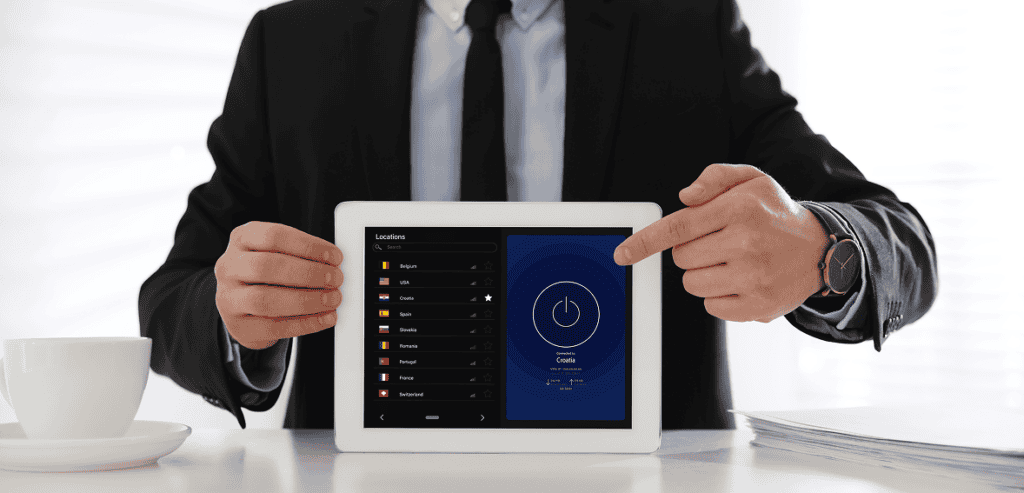
This step is often underestimated. The technology part is easy — the human part requires a bit of attention.
Your employees need to know three things:
- The old clock is gone. The new kiosk is on the tablet.
- They’ll use their PIN to clock in. Give them their PIN, or walk them through how to find it.
- They can also clock in from the mobile app if they’re in the field — direct them to download it.
A five-minute team huddle or a note in your communication channel is usually sufficient. The interface is intuitive enough that most employees figure it out on their first punch with minimal instruction.
If you have employees who were frustrated by fingerprint scanner issues with the old clock — and you probably do — they’re going to be happy about this change. PIN entry works every time.
Step 7: Connect to Payroll
Once you’ve run your first pay period on the new system, connect it to your payroll provider. Most platforms support direct integration with QuickBooks, ADP, Gusto, Paychex, and others — or a CSV export formatted for your provider if a direct integration isn’t available.
The process is:
- Approve the timesheets for the pay period.
- Lock the pay period to prevent retroactive edits.
- Export or sync to payroll.
The first time through this, allocate an extra 20 minutes to verify that the numbers look right and the export format matches what your payroll system expects. After the first successful cycle, it usually takes 10 minutes or less.
What Happens to Your Old Clock
Once you’ve completed a successful pay period on the new system and confirmed that everything is working correctly, the old hardware clock can come down.
A few things to do before you remove it:
- Export your historical time data from the old system if you can. Keep it for at least three years for wage and hour compliance purposes.
- If the device is under a hardware subscription, check the cancellation terms. Some vendors have auto-renewing contracts.
- Factory reset the device before disposing of it — it may contain employee biometric data that should be wiped.
What you do with the physical device is up to you. Some businesses repurpose the mounting hardware. Some donate the tablet to another use in the business. The fingerprint clock itself is harder to repurpose — it’s a single-function proprietary device.
Common Questions
What if the tablet’s internet goes down?
With a cloud time tracking platform that has offline capability, punches queue locally on the device and sync when connectivity returns. No punches are lost. If your platform doesn’t have offline capability, make sure your location has reliable WiFi or cellular backup — or choose a platform that handles offline gracefully.
What prevents employees from clocking in each other?
Photo capture at punch. When an employee enters their PIN, the tablet’s camera takes a photo that’s attached to the punch record. Managers reviewing timesheets see the photo. If someone else clocked in using a borrowed PIN, the photo won’t match. This is more reliable than fingerprint scanning in many real-world conditions and just as effective as a deterrent.
Can we use a tablet we already own?
Usually, yes. Most kiosk-mode time tracking apps run on current-generation iOS and Android devices. Check the app’s minimum OS requirements. A device that’s two or three years old is typically fine; anything older than that may need to be tested to confirm performance.
What if employees also need to clock in from the field?
No problem. The kiosk and mobile clock-in work in parallel. Employees who work at the office or store location use the kiosk; employees who work in the field use the mobile app. All punches flow into the same timesheet, the same dashboard, the same payroll export.
How do we handle it if an employee forgets their PIN?
Admins can look up or reset any employee’s PIN from the management dashboard in about 30 seconds. It’s a common occurrence, especially in the first week — build in a quick way for employees to reach a manager when this happens, and it won’t be a significant issue.
Total Time Investment to Complete the Transition
To summarize the steps and estimated time:
- Account setup and employee import: 15–30 minutes
- Company settings configuration: 10–20 minutes
- Location and geofence setup: 5–10 minutes
- App installation and kiosk configuration: 10 minutes
- Testing: 15 minutes
- Employee briefing: 15–30 minutes
- First payroll cycle: additional 30 minutes to verify
Total: roughly 90 minutes to 2 hours to go from zero to a fully operational tablet kiosk. After that, the only ongoing task is reviewing and approving timesheets — which takes less time than it did with your hardware clock, because the data flows automatically to payroll.
The Takeaway
Replacing a hardware time clock with a tablet kiosk isn’t a major project. It’s an afternoon. The setup is guided, the learning curve is gentle, and the employees adapt quickly. What you get on the other side is a time tracking system that’s connected to your scheduling, your payroll, and your mobile workforce — instead of a standalone device that just records punches and makes you do everything else manually.
The $300 you spent on that fingerprint clock wasn’t wasted — it served its purpose. But it’s time to move to a tool that does the full job.
CloudTimeManager’s PIN kiosk mode runs on any iOS or Android tablet.
Photo capture at every punch. Offline-capable. Connected to scheduling, timesheets, and payroll export. Available on the Professional plan and above. Try it free for 14 days — no credit card, no hardware required.