

Most employers understand the headline rule. If you have enough employees, you have to offer health coverage or face a penalty. What catches businesses out is everything underneath that sentence. Who counts as full-time when hours change week to week? What happens when a part-time employee works fifty hours during...
Unpaid Internship: The Primary Beneficiary Test and When You Must Pay

Internships occupy an awkward space in employment law. On one side sits a genuine educational tradition, where a student spends a summer learning how an industry works, watching professionals do their jobs, and building the experience that turns a degree into a career. On the other sits a practice that...
Paid Leave for Jury Duty, Voting, and Bereavement: What’s Required and How to Track It

Most employers handle jury duty, voting time, and bereavement leave on instinct. Someone brings in a summons, a manager says take the day, and payroll works it out later. That approach is fine until two things happen at once: an employee asks why a colleague was paid and they were...
Payroll Deductions That Can Drop Pay Below Minimum Wage: Uniforms, Tools, and Cash Shortages

Payroll deductions feel like small housekeeping items. A few dollars for a shirt, a share of a tool cost, a till that came up short at the end of a shift. Most employers who make these deductions are not trying to underpay anyone. They see it as fair, because the...
Mandatory Overtime: When You Can Require It and How to Schedule It Fairly

Every business hits stretches when there is simply more work than hours. A big order lands, two people call in sick on the same week, the holiday rush arrives early, or a machine breaks and the backlog piles up. Asking for volunteers usually comes first, but sometimes not enough people...
Is Training Time Compensable? Meetings, Certifications, and Online Modules

Ask ten managers whether employees should be paid for training and you will probably hear ten slightly different answers. Some assume training is part of the job, so of course it is paid. Others think anything that helps an employee grow their skills is a personal benefit and should not...
How Nondiscretionary Bonuses Affect the Overtime Regular Rate
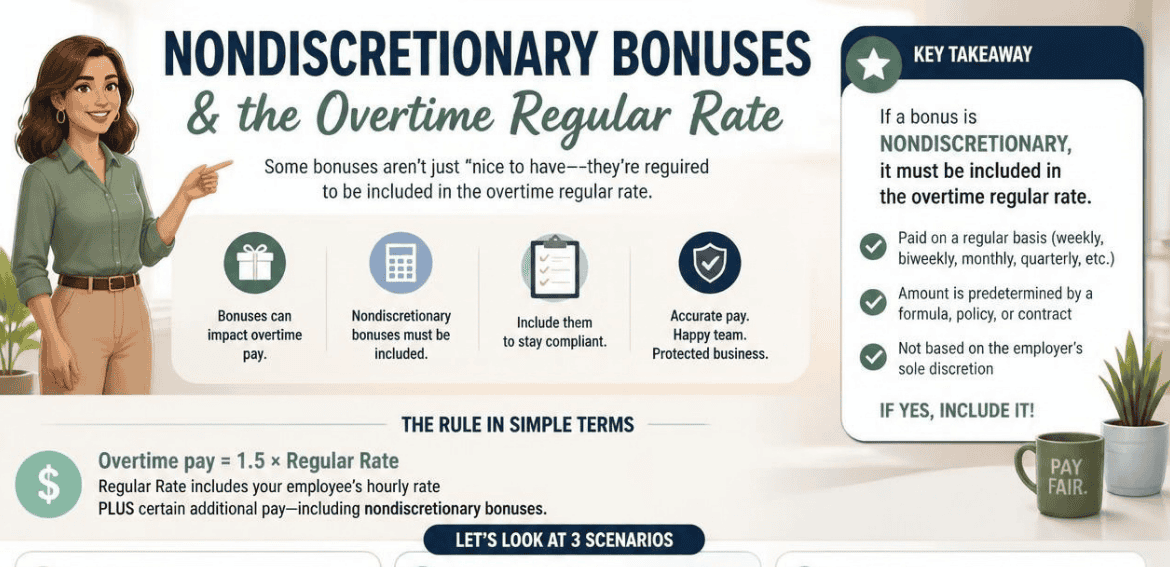
You paid your team a performance bonus. You feel good about it. But here's the part that trips up thousands of employers every year: that bonus may have just changed how much overtime you legally owe. Miss the math, and you could be underpaying workers without even knowing it. Nondiscretionary...
Piece-Rate Pay: Tracking Nonproductive Time and Rest Breaks Correctly

Piece-rate pay sounds simple on paper. A worker gets paid for each unit they finish, whether that means boxes packed, rows picked, cars detailed, garments sewn, or jobs completed. The faster and better they work, the more they earn. For many employers and workers, this system feels fair and motivating....
The 8-and-80 Overtime Rule for Hospitals and Residential Care Employers

Most employers calculate federal overtime after a nonexempt employee works more than 40 hours in a seven-day workweek. Hospitals and certain residential care establishments may have another option under the Fair Labor Standards Act. When all conditions are satisfied, an eligible employer and employee can use a fixed 14-day work...
Meal Periods vs Short Breaks: What Employers Need to Track
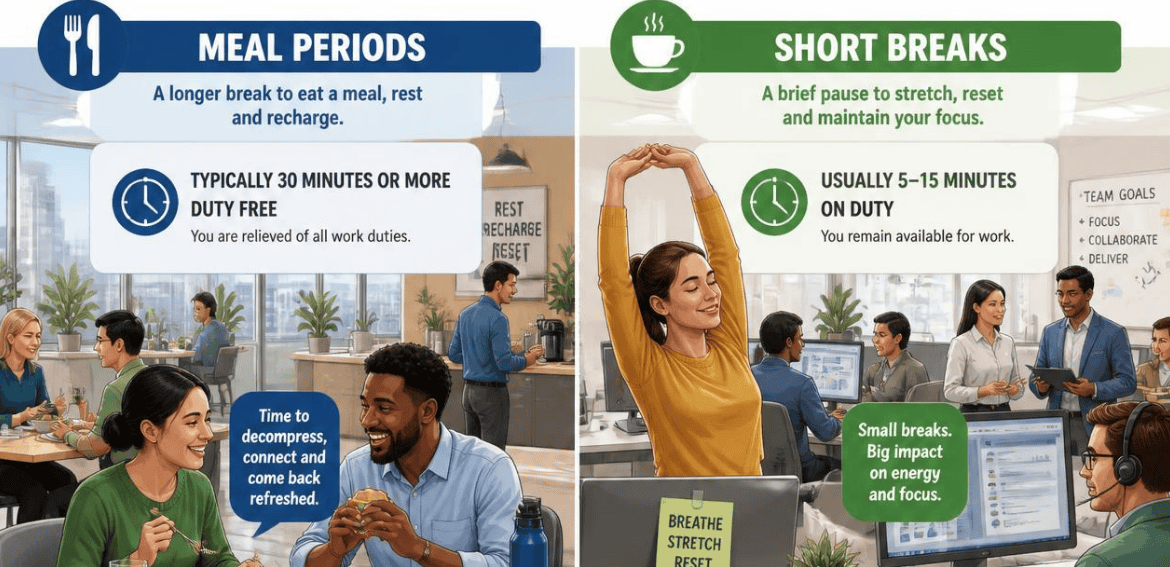
One missing time punch can cost you thousands. Picture a wage claim that hinges on a single Tuesday. An employee says they never got their lunch. Your records show a gap, but no clear start and stop time. Suddenly the burden is on you to prove a break happened. This...